Unequal survival: understanding cancer inequalities in West Africa
Where you are born can determine whether you live or die from a disease that, in many cases, does not have to be fatal. In a hospital in London or Toronto, a woman diagnosed with early-stage breast cancer has access to a clear path: a biopsy, a treatment plan, surgery if needed, chemotherapy, radiation, and regular follow-ups. Her five-year survival rate is above 90%. That same diagnosis in many parts of WestAfrica can feel like a death sentence. Not because the disease is different, but because everything around it is. Cancer is often framed as a disease of wealthier countries, linked to longer life expectancy and modern lifestyles. But that view is incomplete. Across West Africa, cancer rates are rising, and the gap in outcomes between patients in the region and those in high-income countries is widening.Understanding this gap is not academic. It is a matter of life and death for millions.
The silence before the diagnosis
One of the biggest challenges is that cancer is often detected too late. By the time many patients reach a hospital, the disease is already advanced, harder to treat, and more likely to be fatal. This is not because people ignore their health. It is because systems for early detection are limited or inaccessible. Screening programmes such as mammograms, cervical smears, and colonoscopies have reduced cancer deaths in wealthier countries but remain scarce across much of West Africa. In many communities, there is no structured system for early detection. People often seek care only when symptoms become severe. Stigma also plays a role. In some communities, cancer is misunderstood and linked to spiritual punishment or shame. Patients, especially women with breast or cervical cancer, may hide symptoms for months or years out of fear of judgment. This is not ignorance. It reflects cultural pressures and a healthcare system that has not always earned public trust.
When care is available but unreachable.
Even when cancer is diagnosed, accessing treatment is a major barrier.Many countries in the region have only a few treatment centres, usually located in major cities. For people in rural areas, this means long travel distances and high costs. Facilities often struggle with limited resources. Radiation machines may break down, chemotherapy drugs may be unavailable, and waiting time scan stretch for months.The financial burden is severe. In places where health insurance coverage is limited, a cancer diagnosis can push families into poverty. Patients are often required to pay upfront for treatment, and many simply cannot afford it. There is also a shortage of healthcare professionals. Oncologists, pathologists, and trained nurses are in short supply. Many skilled professionals leave for better opportunities abroad, weakening already fragile health systems. In some countries, there are fewer than ten oncologists serving millions of people.
Why this matters and what can be done
Cancer inequality affects more than health outcomes. When people die from treatable cancers, families lose income, children lose caregivers, and communities lose stability. Cervical cancer, for example, is preventable through vaccination and treatable when detected early, yet it remains a leading cause of death among women in the region.
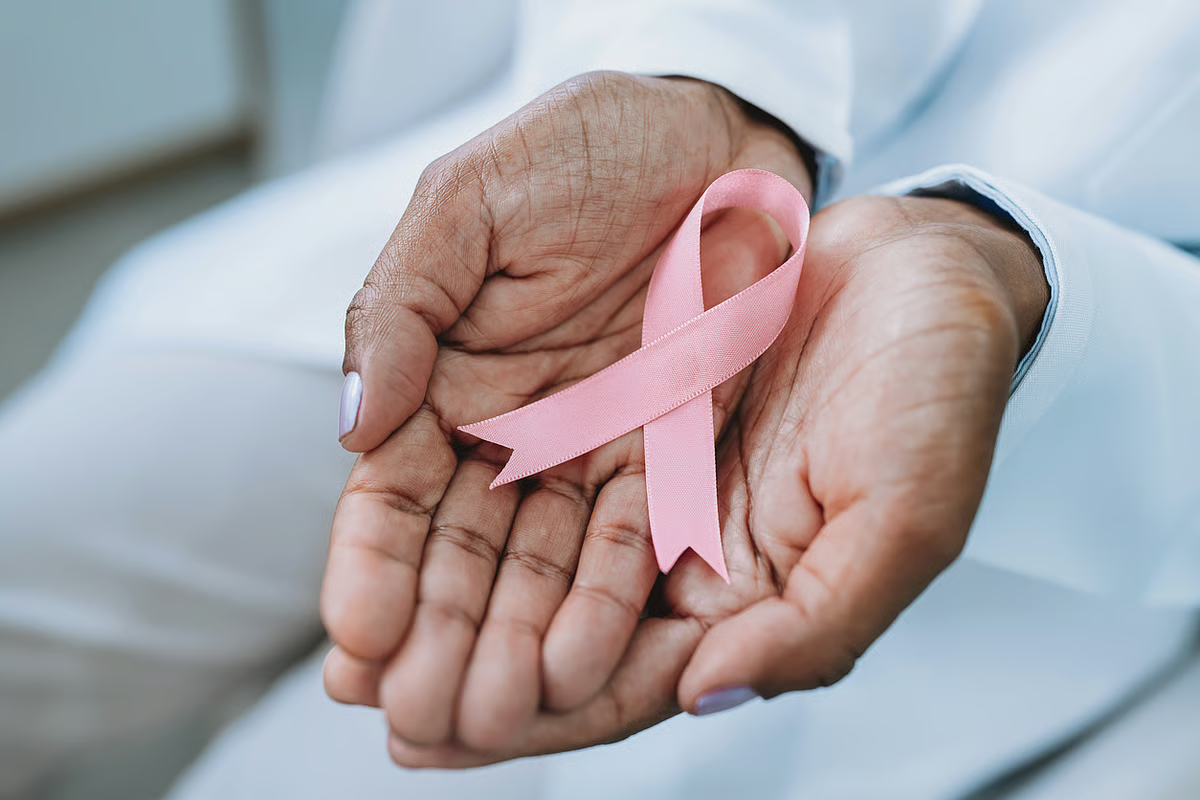
However, progress is possible. Community health workers are being trained to raise awareness and support early detection. Mobile clinics are expanding access to underserved areas. Countries such as Ghana and Nigeria are developing national cancer control strategies. Digital health tools and telemedicine are helping specialists support diagnoses from a distance. HPV vaccination programmes are also being introduced and have the potential to significantly reduce cervical cancer rates over time.
References available upon request