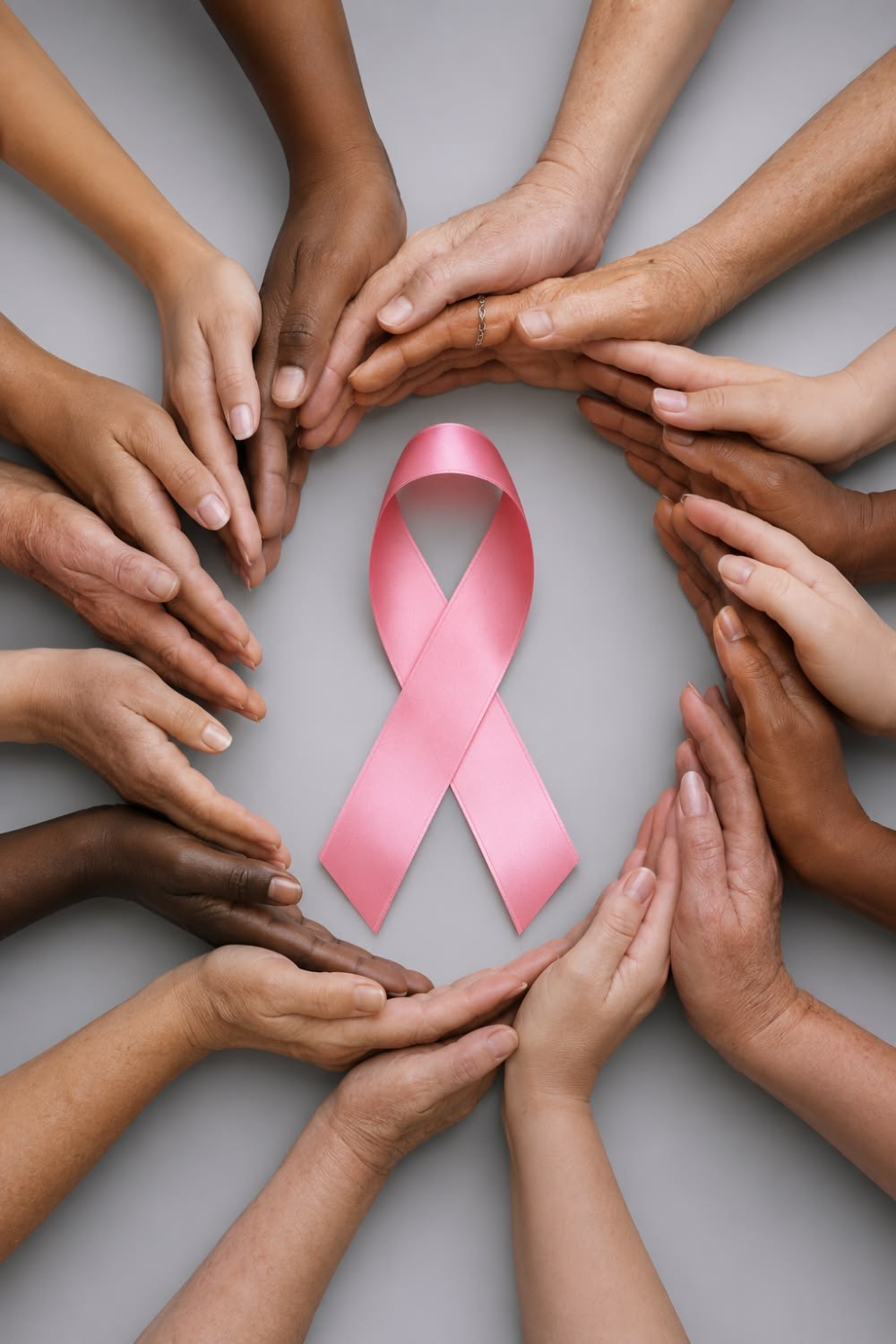
The Hidden Inequality in Breast Cancer: Why Survivorship Is Failing Women in Low-Resource Settings
Breast cancer is often discussed in terms of screening, diagnosis, and treatment. Those stages matter, but they are not the whole story. For many women, especially in low- and middle-income countries, the real inequality becomes most visible after treatment ends, in the long, often overlooked phase of survivorship. Survivorship is where women are expected to recover, rebuild, and return to daily life. Yet in many low-resource settings, the support systems needed to make that possible are fragmented or missing altogether. Recent PubMed research shows that women-centric breast cancer care in low- and middle-income countries is still constrained by late-stage diagnosis, limited access to care, and weak survivorship support (Women-Centric Breast Cancer Care in Low- and Middle-Income Countries, 2025). A separate review on cancer survivorship in LMICs highlights similar gaps in follow-up care, psychosocial support, rehabilitation, and long-term monitoring (dos Anjos et al., 2025).
This matters because survival alone is not enough. If a woman finishes treatment but has no access to rehabilitation, mental health support, symptom management, or guidance on returning to work and family life, then her care is incomplete. For OncoEquity, survivorship is a critical and under-explored equity issue.
WHY SURVIVORSHIP MATTERS
Cancer survivorship has become increasingly important as more people live longer after diagnosis. In high-income settings, survivorship care is often treated as a distinct stage of cancer care, with structured follow-up, symptom monitoring, and support for long-term effects. In many low- and middle-income settings, however, survivorship is not yet built into health systems in the same way. A guideline development paper using breast cancer as a model in Colombia noted that survivorship care has become a key element of cancer control as survival improves globally, but that long-term care remains difficult to implement in LMICs because of system constraints and limited resources (Peñaloza et al., 2023). That is an important insight because it shows survivorship is no longer optional. As survival increases, the need for structured long-term support also increases. Breast cancer survivors may experience fatigue, pain, lymphoedema, anxiety, depression, body image concerns, fertility issues, cognitive changes, and financial hardship. These problems are not minor. They can shape whether a woman can return to work, care for her family, or maintain her quality of life. If survivorship support is weak, the burden of cancer does not end with treatment; it simply changes form.
THE OVERLOOKED PHASE OF CANCER
Most public discussions about breast cancer focus on awareness, diagnosis, and treatment. These are important, but they often create the impression that once a woman has completed therapy, the hard part is over. The reality is more complicated. A woman may survive breast cancer and still live with long-term complications that affect her body, mind, relationships, and finances. Recent reviews of long-term survivorship care show that even when clinical guidelines exist, they often do not fully address psychosocial support, lifestyle guidance, or management of complications such as lymphoedema, osteoporosis, and cognitive dysfunction (Pimentel-Parra et al., 2025). This is especially important in low-resource settings, where even basic follow-up can be difficult to access. In LMICs, survivorship care is often fragmented because health systems are already under pressure from workforce shortages, limited oncology infrastructure, and competing public health demands. As a result, survivors may be discharged with little guidance and expected to navigate persistent symptoms on their own. That is not equity. It is a gap in care.
POVERTY DOES NOT DISAPPEAR AFTER TREATMENT
Poverty shapes survivorship just as much as it shapes diagnosis. Women living in low-income settings may already face travel costs, time off work, unpaid caregiving responsibilities, and unstable access to medicines during treatment. Those pressures do not stop once treatment is complete. A study on persistent neighbourhood poverty and breast cancer outcomes found that women living in poorer areas experienced worse tumour characteristics, different surgical management patterns, and higher mortality (Luo et al., 2024). This is important because it suggests that the social environment surrounding a woman continues to influence her outcome even after diagnosis and treatment decisions have been made. Other research on marginalised women shows that lifelong adversity can shape attitudes to risk, access to care, and health aspirations, creating a cycle in which survival does not automatically translate into recovery or wellbeing (Hanson et al., 2019). For women in low-resource settings, survivorship may therefore include not only ongoing medical issues, but also financial stress, emotional strain, and loss of opportunity.
WHY LMIC SURVIVORS ARE ESPECIALLY VULNERABLE
In low- and middle-income countries, breast cancer survivorship is often shaped by the same structural inequalities that affect the rest of the care pathway. Women are more likely to be diagnosed late, more likely to face delays in treatment, and less likely to receive structured follow-up. A recent PubMed review of women-centric breast cancer care in LMICs describes survivorship support as fragmented and insufficiently integrated into routine care (Women-Centric Breast Cancer Care in Low- and Middle-Income Countries, 2025). A broader survivorship review in LMICs found that survivors face weak psychosocial support, limited rehabilitation, and poor continuity of care, while successful strategies are often locally developed but under-supported (dos Anjos et al., 2025). That tells us something important: survivorship inequity is not just about lack of awareness. It is about the absence of a health system model that recognises the full journey of the patient. The problem is especially visible in under-resourced settings where follow-up systems are weak. Women may be treated in one facility, discharged, and then lost to the system entirely. Without coordinated survivorship care, long-term complications can go untreated and quality of life can deteriorate.
WHAT A BETTER MODEL COULD LOOL LIKE
A more equitable model of breast cancer care would treat survivorship as a core part of the pathway, not a final afterthought. That means designing systems that support women beyond the point of active treatment.
A stronger survivorship model in LMICs would include:
• routine follow-up and symptom monitoring,
• rehabilitation and physical recovery services,
• psychosocial support,
• help with work and financial reintegration,
• fertility and menopausal counselling,
• and culturally appropriate patient education (Peñaloza et al., 2023; Pimentel-Parra et al., 2025; dos Anjos et al., 2025).
It would also require better data. If health systems do not collect information on survivor outcomes, late effects, and quality of life, they cannot identify who is being left behind. That is where OncoEquity’s interest in data becomes especially relevant. Data can reveal not only who gets diagnosed and treated, but who is supported to recover and live well afterward.
WHY THIS MATTERS TO ONCOEQUITY
This topic is a strong fit for OncoEquity because it is both specific and underexplored. Survivorship is a space where inequity often remains invisible. It is also a space where data, equity, and women’s health come together in a meaningful way. If OncoEquity is building a brand around breast cancer equity, then survivorship offers a powerful niche. It allows you to move beyond the more common focus on screening and early diagnosis and into a more nuanced, more human part of the cancer pathway. That is valuable for your website, your social media, and your longer-term research identity. More importantly, it signals something deeper: that your work is not only about helping women survive breast cancer, but about helping them live well after it.
Final thoughts
Breast cancer survivorship is one of the most overlooked inequalities in global cancer care. In low- and middle-income countries, women often face late diagnosis, limited access to treatment, and fragmented support after treatment ends (Women-Centric Breast Cancer Care in Low- and Middle-Income Countries, 2025; dos Anjos et al., 2025). Poverty, weak health systems, and limited follow-up services all shape whether survivorship becomes recovery or another stage of disadvantage. If we want cancer care to be truly equitable, then we need to stop treating survivorship as an optional extra. It is a core part of the cancer journey, and for many women, it is where the need for support is greatest.
References
Dos Anjos, G. R., et al. (2025). Cancer survivorship in low- and middle-income countries. PMC.
Hanson, S., et al. (2019). Cancer risk in socially marginalised women. PMC.
Luo, J., et al. (2024). Persistent neighborhood poverty and breast cancer outcomes. PubMed.
Peñaloza, M., et al. (2023). Survivorship care in middle-income countries: A guideline development for Colombia using breast cancer as a model. JCO Global Oncology.
Pimentel-Parra, G. A., et al. (2025). Systematic review of clinical practice guidelines for long-term breast cancer survivorship: Assessment of quality and evidence-based recommendations. British Journal of Cancer.
Women-Centric Breast Cancer Care in Low- and Middle-Income Countries: Challenges, Solutions, and a Roadmap for Equity. (2025). PubMed.